

Attack on Aleppo’s Kurdish neighbourhoods
Freedom News - Tuesday, January 13, 2026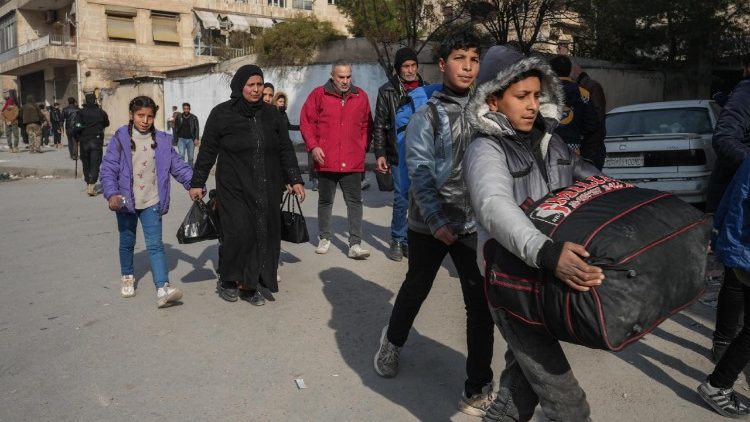
Regime assault on self-administrated areas exposes weakness of post-Assad settlement
~ Blade Runner ~
Syrian government forces launched heavy attacks over the past week on the predominantly Kurdish, self-administered neighbourhoods of Sheikh Maqsoud and Ashrafieh in Aleppo, marking one of the most serious escalations in the city since the collapse of the Assad regime. The assault followed months of pressure, blockade and low-intensity attacks throughout 2025, intensifying at the end of December before erupting into a full offensive in early January.
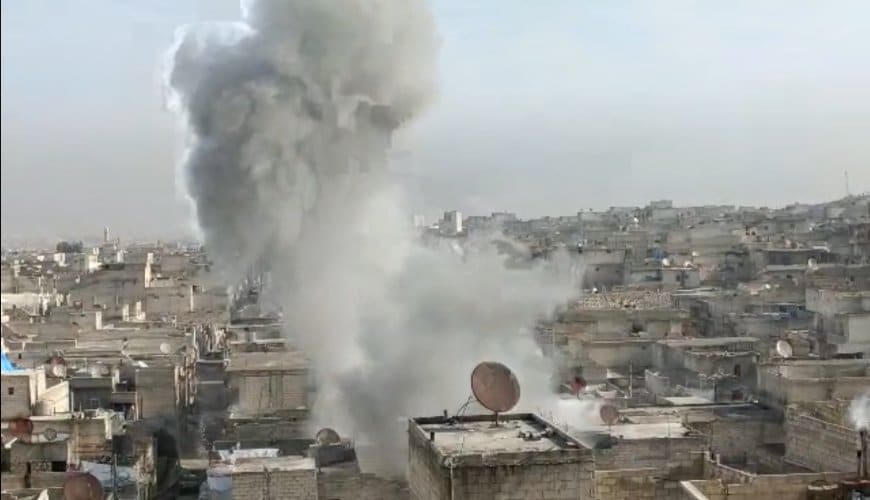
Residents reported deaths and large numbers of injuries as shelling and urban combat hit densely populated civilian areas. Homes were destroyed, hospitals overwhelmed and thousands displaced. Medical facilities serving the neighbourhoods were struck or rendered unusable, forcing emergency evacuations of wounded civilians and fighters alike.
As fighting peaked on 9 and 10 January, civilians gathered at Khalid al-Fajr hospital to assist the wounded and seek shelter. Turkish-backed groups reportedly shelled the hospital repeatedly. The number of people killed, injured or missing remains unknown. During an international call held in the aftermath, speakers cited reports of kidnappings, executions, torture and mutilation of bodies, including those of fallen women fighters — allegations largely absent from mainstream coverage.
On 11 January, a partial ceasefire was announced to allow the evacuation of wounded civilians, women and children, and the recovery of bodies. Official statements framed the ceasefire as a humanitarian measure amid mounting civilian harm and destruction.
The offensive involved thousands of fighters from multiple brigades, many backed by Turkey, and employed tanks, armoured vehicles, artillery and heavy munitions, alongside surveillance and strike support from Turkish drones. Reports also referred to the use of gas munitions. Internal Security Forces (Asayish) organised the defence of the neighbourhoods under siege conditions.
Although officially framed as clashes between Syrian government forces and Kurdish self-defence units, multiple reports point to the involvement of Islamist armed groups operating alongside or under the cover of state forces. Hayat Tahrir al-Sham (HTS), whose networks played a central role in the rise of the current Syrian leadership, has been repeatedly linked to operations targeting Kurdish-held areas despite efforts to downplay its role. Participants in the international call described this as the use of deniable proxies, blurring the line between state violence and jihadist mobilisation.
Following the initial assaults, Damascus-aligned forces pushed for the full displacement of Sheikh Maqsoud and Ashrafieh. The General Council of the two neighbourhoods rejected surrender and called for general mobilisation. In response, civilian convoys from cities across north-east Syria set out towards Aleppo, framing the defence as a collective popular struggle rather than a purely military confrontation.
Mainstream media reported that Kurdish-aligned Asayish and SDF forces withdrew under the ceasefire, with Syrian government forces subsequently taking control. Participants in the international call confirmed evacuations and widespread civilian harm but declined to give definitive information on force positions, citing the ceasefire’s fragility. Fighting reportedly continued after its announcement, while returning civilians faced extensive damage, unexploded ordnance, arrests and security operations.
The escalation coincided with renewed US military activity in Syria. During the same period, US Central Command carried out air strikes targeting Islamic State positions, with Jordan confirming participation. While presented as counter-terrorism operations, these strikes reinforced a broader climate of militarisation, underscoring that Syria remains shaped by competing imperial interventions rather than moving towards peace.
Beyond the battlefield, the offensive was accompanied by an intense campaign of media warfare. The international call described a flood of videos portraying Syrian government or allied forces as rescuing Kurdish civilians from alleged attacks by the SDF and Asayish, inverting residents’ accounts and obscuring the impact of state and militia shelling on civilian areas.
Gendered propaganda also featured prominently. Videos depicted women fighters as defeated or humiliated, erasing their central role in organising defence and sustaining resistance under siege. Speakers stressed that women played a decisive role during the attacks, arguing that such distortions aim to undermine the political foundations of the Kurdish-led revolution, where women’s liberation is structural rather than symbolic.
Kurdish organisations widely view the attacks as part of a longer continuum of violence against minority communities in Syria. Participants situated the escalation alongside recent massacres of Alawite and Druze communities, arguing that despite leadership changes, the transitional government continues to reproduce the nationalist and centralising mentality of the Assad era.
Sheikh Maqsoud and Ashrafieh have for over a decade functioned as self-administered Kurdish neighbourhoods within Aleppo, offering sanctuary to Kurds, Arabs and others displaced since the start of the uprising. They maintained autonomy from both the Assad regime and Islamist opposition factions despite prolonged sieges and repeated attacks, making them long-standing targets for forces opposed to decentralised self-rule.
This perspective contrasts with mainstream coverage, which frames events as disputes over sovereignty, security or stalled integration agreements. In March 2025, Damascus and the SDF announced a deal to integrate Rojava’s defence forces into the Syrian army and political system. Implementation has stalled amid distrust, disagreements over decentralisation and fears that integration would dismantle hard-won autonomy.
For Kurdish movements, the issue is existential. The self-administration project in Rojava represents a radical departure from the nation-state model, built around decentralisation, women’s liberation and coexistence between ethnic and religious communities.
External pressures continue to shape Syria’s future. US-mediated talks recently established a joint US-supervised intelligence “fusion mechanism” between Israel and Syria, alongside proposals for demilitarisation and economic zones, reinforcing the primacy of security arrangements over popular will.
Turkey remains central to these dynamics, viewing the SDF and associated Kurdish structures as an existential threat and maintaining sustained military pressure. Speakers argued the Aleppo offensive could not have been launched without long-term Turkish pressure and assistance.
These developments coincide with renewed discussion of negotiations involving Abdullah Öcalan and the Turkish state. While framed by Ankara as peace efforts, the timing of simultaneous military assaults suggests a strategy aimed at extracting concessions while weakening Kurdish leverage rather than pursuing genuine resolution.
International normalisation has further emboldened this approach. During a 9 January visit to Damascus, European Commission president Ursula von der Leyen announced €620 million in EU funding for Syria’s recovery, describing the Aleppo clashes as “worrisome” while calling for dialogue.
As of now, Syrian government forces control Sheikh Maqsoud and Ashrafieh, while many displaced residents remain unable or unwilling to return. The ceasefire has halted the most intense fighting but resolved none of the underlying political questions. For Kurdish communities, early January represents another phase in a prolonged struggle against state power, media distortion and regional alliances determined to extinguish an alternative model of social organisation.
Whether further escalation can be avoided remains uncertain. What is clear is that the attacks on Aleppo’s Kurdish neighbourhoods have again exposed the vulnerability of self-administration in the face of converging state, jihadist and imperial interests.
Machine-assisted edit. Images from Radio Onda d’Urto
The post Attack on Aleppo’s Kurdish neighbourhoods appeared first on Freedom News.