

The tireless search for Cassandra
Freedom News - Thursday, December 4, 2025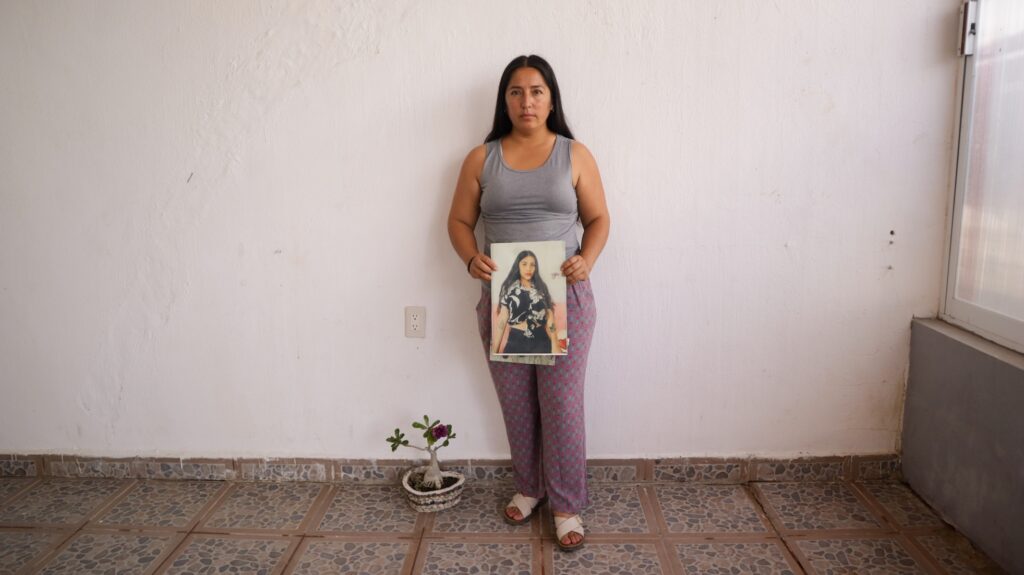
Isabel Torres’s daughter was abducted in 2022 during a party in Berriozábal, Chiapas—she has searched and dug in numerous locations trying to find her
~ Mariana Morales ~
When she searches in the field, she uses a rod that she inserts deep into the ground, pulls out, and if she smells decay, she knows she may have found human remains. Isabel Torres Aquino is able to distinguish between human and animal bones.
Her search began in February 2023 in La Piedrona, a place located in Berriozábal, where her daughter Cassandra Arias Torres disappeared on 17 December, 2022. And although that first time she didn’t find any clues that led her to the 18-year-old, it motivated her to watch a documentary on YouTube about the searchers in the north of the country, read a book, look for information on social networks, and accept an invitation to take courses at UNAM on how to search.
In the municipalities of Emiliano Zapata, Chiapa de Corzo and Yajalón, Isabel has removed bullets, human remains, hair, clothing, footwear with her own hands, and has entered ranches taken over by organized crime, where she has also dug.
In January 2025, while searching an abandoned ranch in the community of San Isidro, an hour from his home, he put his head into a two-meter-deep cistern and discovered burned human remains. When he climbed out of the cement hole, he prayed that these people, still unidentified, would rest in peace.
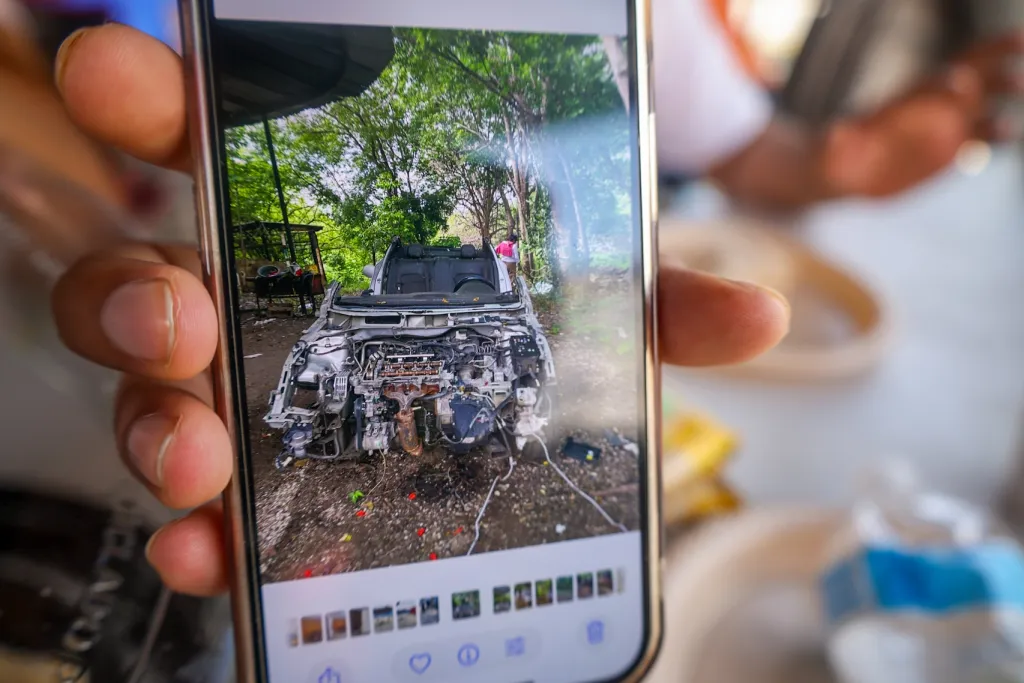 The mothers searching for their missing children discovered vehicles belonging to organized crime abandoned in the Salvador Urbina community, in Chiapa de Corzo, on 19 March, 2025. (Damián Sánchez)
Those who know her know that she wasn’t used to praying; she only started last year, at age 38, when her other daughter, six years old, strangely asked her to. The numerous searches had exhausted her, and she no longer felt at peace. That’s why, ever since hearing that request, she goes to a Christian church to pray.
Isabel didn’t know that, although officially Mexico is not in an armed conflict, there are more than 130,000 missing persons. When she lived under the shade of an avocado tree in a small wooden cabin inside a plant nursery, her daily routine consisted of getting up early, taking care of her plants with her husband Jony, mainly the desert rose—whose resilience in dry climates she appreciated—dropping her daughter off at preschool, going to Casandra’s house to visit her and her three-year-old son, and returning to the cabin to sell her rose bushes.
Her mother taught her how to grow plants. That’s why, in that house, besides the avocado and the rose bushes, there was a nanche tree, in whose shade she used to sit with Cassandra to braid her long, straight, black hair.
After the disappearance, the tree withered, and with the help of Jony, who now works as a gardener for the State Civil Protection Secretariat, they abandoned the site. Jony says he admires Isabel’s courage when she goes out to dig on ranches taken over by criminal groups, despite the risk of something happening to her.
Before her daughter disappeared, Isabel wore her hair short and brown, dressed in tight clothes, and rarely protested. Today, she wears long sleeves because of the sun, and raises her voice when any Chiapas authority accompanies her on searches, but she won’t let them insert their rod into the area where they had agreed to do so. She is short, thin, fair-skinned, with a sharp nose, and long, straight, black hair like the kind Cassandra inherited, which she also wears in two braids.
She is no longer the woman tending the rosebush; now she is part of the Searching Mothers of Chiapas, from the South to the Heart, which has quickly become part of national collectives. On November 20th, they attended the first National Meeting of Searching Families, presided over by the Archdiocese of Mexico in Mexico City.
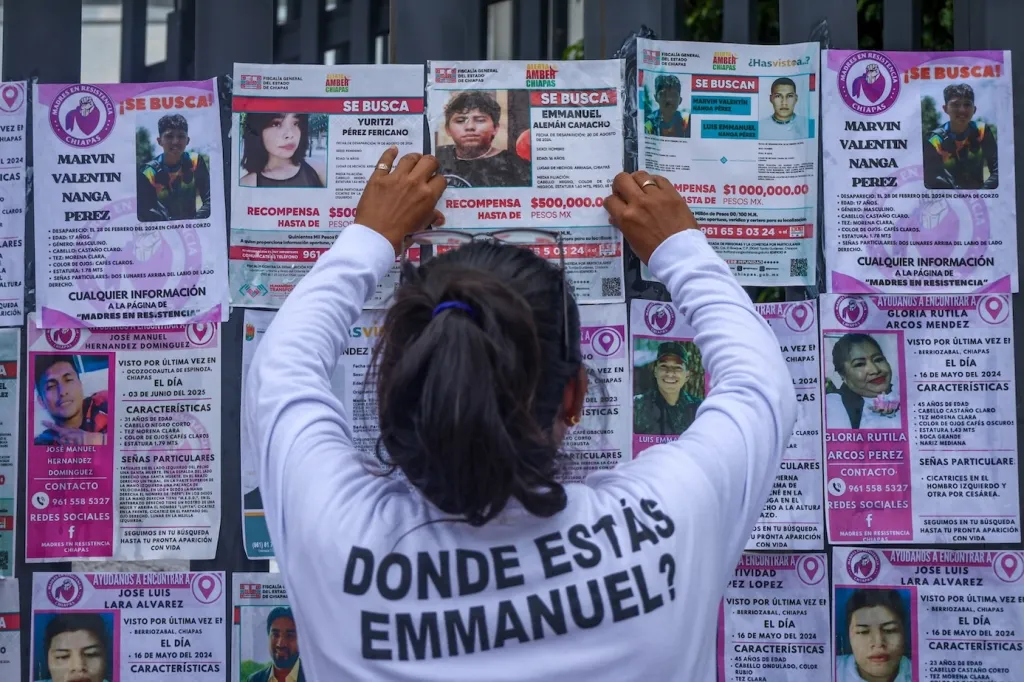 Adriana Camacho posts her son’s missing person flyer on a gate of the State Attorney General’s Office in Tuxtla Gutiérrez in October 2025. (Damián Sánchez)
This journey in Mexico is not new; it began when Rosario Ibarra started searching for her son Jesús Piedra, who disappeared in 1975. In 2004, Silvia Ortiz, from Coahuila, began investigating her daughter Silvia. In 2012, Alicia Guillén, from Chiapas, searched for her son Eduardo abroad; María Herrera is trying to find her children who disappeared in Guerrero in 2008 and in Veracruz in 2010; Ceci Flores is also searching for her children, missing since 2015 and 2019; and since 2014, the families of the 43 students from the Ayotzinapa Rural Teachers’ College in Guerrero have been searching for them throughout the country.
Numbers on the rise
While the first documented disappearances in Mexico began during the so-called “dirty war” in the 1960s, they have now multiplied. According to Data Cívica, an organization that analyzes data for the defense of human rights in Mexico, disappearances in the country increased 55 times by 2024 compared to 2006, and from 2023 to 2024 there was a 9.5% increase.
In Chiapas, disappearances began to increase in 2018, and continued to rise until reaching 8,589 people in the first half of 2025, according to a record made by Data Cívica with data from the National Registry of Missing and Unlocated Persons (RNPDNO).
The exponential increase occurred during the previous six-year term, when Rutilio Escandón of the Morena party was in power. It began in 2019 with 321 disappearances, and by 2024 there were 1,468 victims.
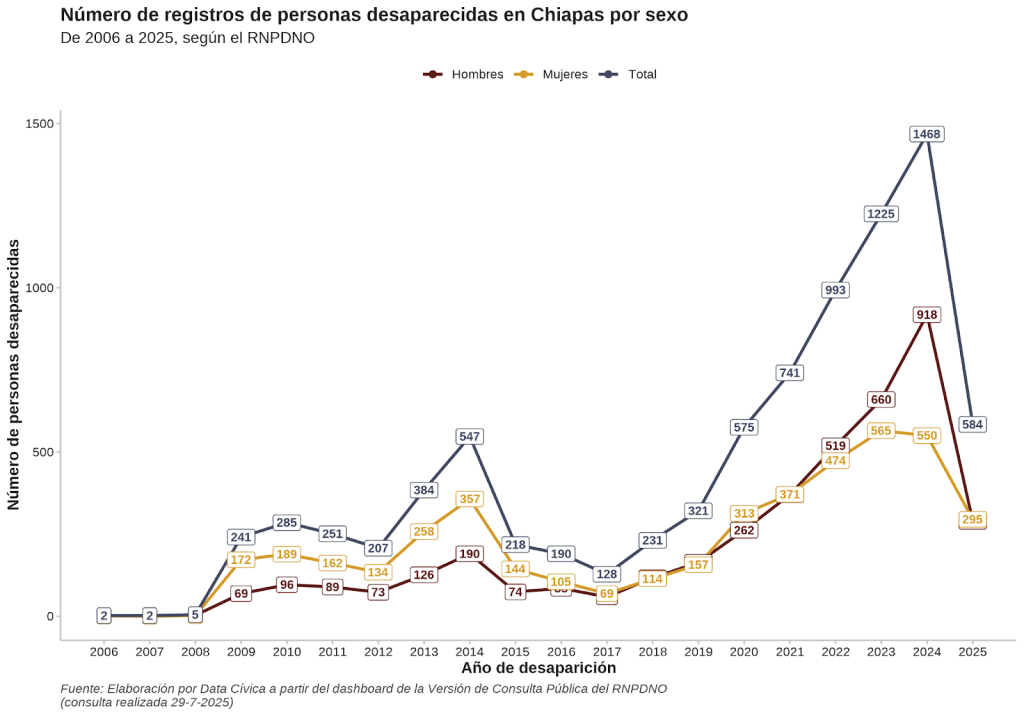 The state of Chiapas ranks among the five in the country with the lowest disappearance rate, at 155 people per 100,000 inhabitants. “However, the peculiarity is that disappearances have increased rapidly in just a few years,” says Pamela Benítez, an analyst at Data Cívica.
“Disappearances have reached this point in Chiapas because criminal groups have adapted and begun to diversify their businesses, with new leaders, using the same routes, but now negotiated differently. In this new landscape, they need people for work, recruited either by force or voluntarily,” explains Adrián Reyes Rincón, legal coordinator of the Minerva Bello Center, an organization that supports victims of violence and is based in Guerrero.
“We have documented that there are forced training centers in the municipality of Venustiano Carranza, in the central region of the state, for example,” he adds.
Nationally, more men than women tend to disappear, but Chiapas is one of the states —along with Yucatán, Campeche, Oaxaca, Tabasco, Tlaxcala and Aguascalientes— where the opposite occurs, more women disappear, and the most marked increase is in girls and adolescents, according to Data Cívica.
“Because it is the southern border of Mexico, girls and teenagers disappear into human trafficking,” Reyes Rincón points out.
The largest number of missing migrants are of Guatemalan and Honduran origin, followed by Ecuadorians, Salvadorans, Cubans, Colombians, Nicaraguans and Venezuelans, according to the RNPDNO.
Missing at a wedding
On December 17, 2022, Isabel was celebrating her wedding to Jony at the Tierra Bonita reception hall in Berriozábal, about half an hour from Tuxtla Gutiérrez, the state capital. A group of armed men dressed as state police officers and members of the National Guard stormed the ceremony. They ordered the guests to put their cell phones and wallets in backpacks, and the musicians to lie on the floor. Cassandra and her fiancé were then taken away along with the money they had collected.
They fled in three trucks towards the highway that leads to Tuxtla Gutiérrez, and in an attempt to catch them, Isabel ran through the town, until she realized that it was early morning and she was still wearing her wedding dress.
The following day, when a local media outlet asked the mayor, Jorge Arturo Acero Gómez, a member of the Morena party—who was re-elected to the position a year ago—about these disappearances, he denied the facts.
Immediately, Isabel created a Facebook page: “Searching for Cassandra Arias Torres.” Two years later, in 2024, Liliana Pérez Gutiérrez’s 15- and 19-year-old sons disappeared. When she found Isabel’s page, she contacted her to join the search. Her sons had been taken from their home in the municipality of Chiapa de Corzo, about half an hour from Tuxtla Gutiérrez, by men dressed as soldiers.
That’s how other women contacted Isabel, and then more joined in: a resident of Berriozábal told her, through a social network, that her 28 and 23-year-old sons were taken away with six other men from a tenement; another woman told her that people dressed as state police entered her house, in the same town, and took away two relatives.
Together they posted missing persons flyers in towns, dug in territories controlled by criminal groups, pressured public prosecutors to move their reports from initial registration to formal investigation files—which entails creating a case file—and personally requested that Governor Eduardo Ramirez, Attorney General Jorge Luis Llaven Abarca, and Secretary of Public Security Óscar Aparicio organize searches. On October 31, 2025, they joined together to found Madres Buscadoras de Chiapas, desde el Sur hasta el Corazón (Searching Mothers of Chiapas, from the South to the Heart), and to establish their name, they created a Facebook page.
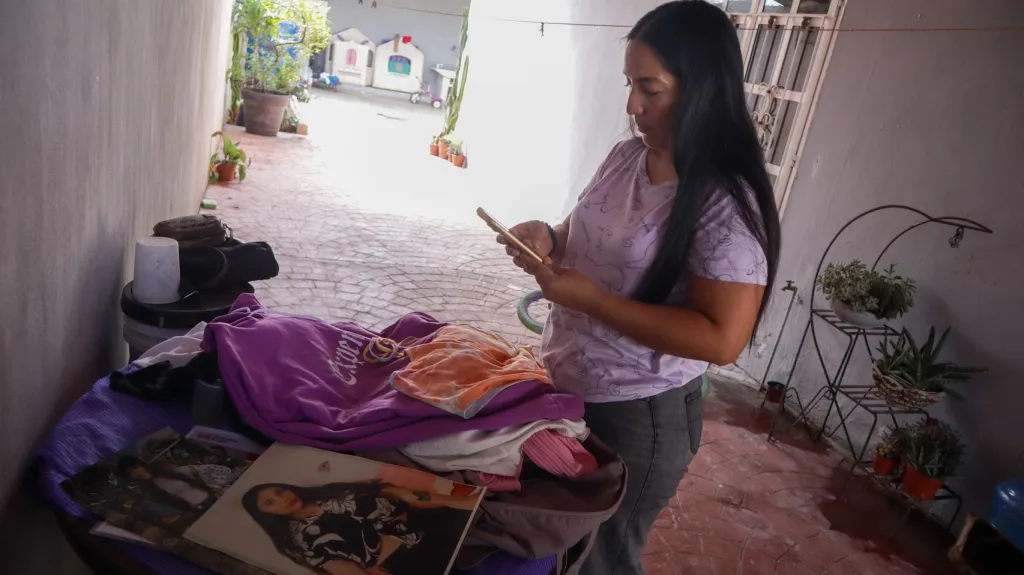 Isabel Torres takes Cassandra’s favorite clothes out of a suitcase. (Damián Sánchez)
The Madres Buscadoras de Chiapas collective is currently made up of nine women:
—Liliana Pérez Gutiérrez is looking for her sons Luis and Marvin, who disappeared in Chiapa de Corzo on February 28, 2024.
—Consuelo Moreno is looking for her husband and son, Ángel and Alan David, who disappeared in Tapachula on June 5, 2023.
—Hilda Moreno is looking for her son Jesús Esteban, who disappeared in Tuxtla Gutiérrez on December 6, 2023.
—Yareli and Yoslin Chavarría are looking for their father Víctor Manuel, who disappeared in Tuxtla Gutiérrez on May 8, 2023.
—Adriana Camacho is looking for her son Emmanuel, who disappeared in Arriaga on August 20, 2024.
—Concepción Feliciano is looking for her daughter Yuritzi, who disappeared in Arriaga on August 19, 2024.
—Lupita Cruz is looking for her son Martín, who disappeared in Arriaga on August 19, 2024.
—María Josefina Ramírez is looking for her son Hernán, who disappeared on August 1, 2024 in Berriozábal.
“We are a family that speaks the same language of pain,” says Liliana, who says that her search tools are three rods, a shovel for digging, and a machete to clear the land where they are going to dig.
The Madres Buscadoras de Chiapas collective is growing and strengthening by weaving networks with other searchers, such as Ceci Flores, founder of Madres Buscadoras de Sonora; Alejandra Cruz of Madres Buscadoras de Jalisco, and Deysi Blanco of Búsqueda en Vida Fernanda Cayetana de Quintana Roo, from whom they have learned to unite more.
 Outside the state prosecutor’s office in the capital of Chiapas, Yareli and Yoslin Chavarría are searching for Víctor Manuel, their father. (Damián Sánchez)
The lost tranquility
In Berriozábal, a municipality with a population of 64,000, residents make a living selling plants in nurseries, engaging in commerce, and working for the state and municipal governments. This municipality ranks 11th in Chiapas for the number of missing persons.
Families have opted to use the fences and posts of the central park to post the missing persons flyers, even though Mayor Jorge Arturo Acero sent city workers on February 5 to tear them down and throw them in the trash cans.
For example, the poster for Benito de Jesús Olmedo González, who disappeared in Chiapa de Corzo, an hour away, on October 27, 2025, was posted by the State Commission for the Search of Persons, and the poster for Carlos Brayan Muñoz Wong, who disappeared a few days earlier, on October 13, in Berriózabal, was posted by his mother.
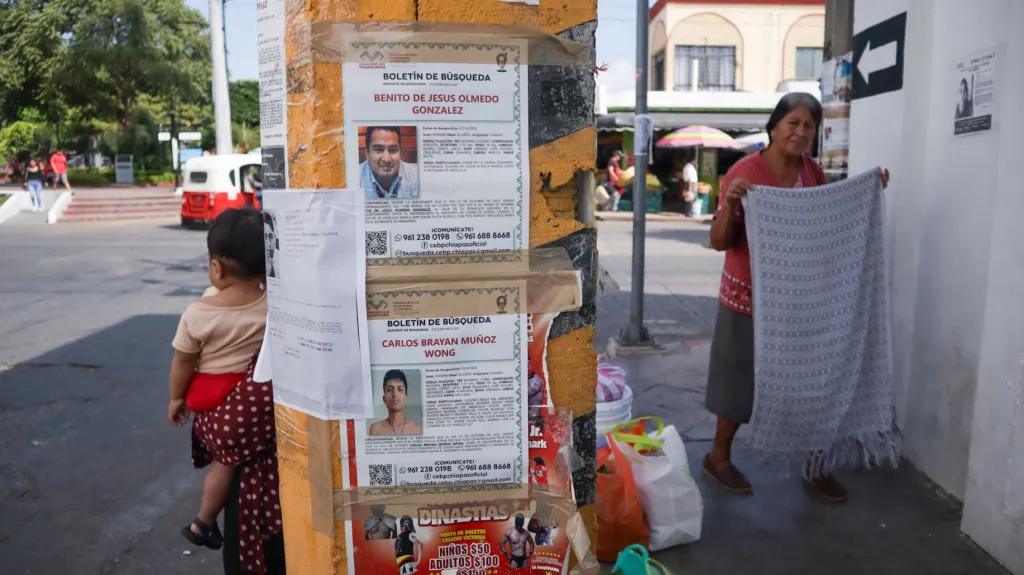 In Berriozábal Park, families post missing person flyers for their loved ones. (Damián Sánchez)
“Berriozábal used to be peaceful, with a cool climate, but now people are being taken away. There’s a waterfall in a mountainous area where we used to go swimming; today we can’t get there because there are armed people, and we can hear gunshots from there,” says a resident.
The highest number of disappearances occurs in municipalities controlled by organized crime, says Reyes Rincón, who adds that even though there are Pakales—an elite state police force created to combat these groups—disappearances continue.
They occur mainly in Tapachula, followed by Tuxtla Gutiérrez, Frontera Comalapa, Comitán, Palenque, La Concordia, Arriaga, Tonalá, Pantelhó, Ocosingo, Berriozábal, La Trinitaria, Huixtla, Reforma, Chiapa de Corzo and San Cristóbal de Las Casas, according to the RNPDNO.
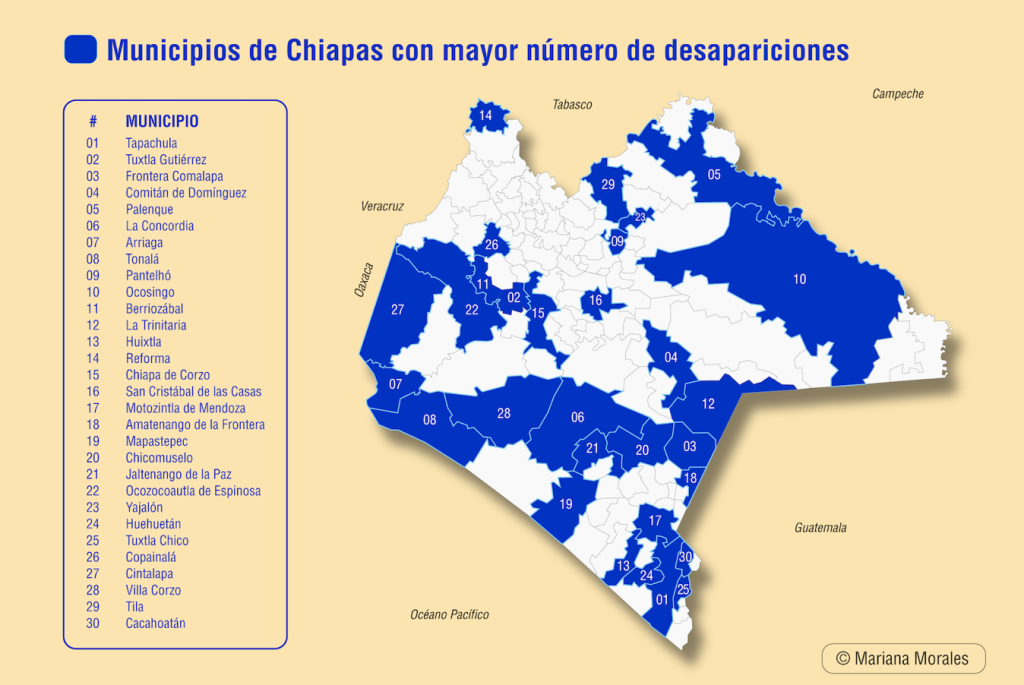 Source: National Registry of Missing and Unlocated Persons. Prepared by: Víctor Hernández.
These locations coincide with land and sea routes identified by the Mexican Ministry of National Defense that are contested by the Sinaloa Cartel and the Jalisco New Generation Cartel (CJNG). Drugs, weapons, migrants, and hydrocarbons arriving from Guatemala destined for the United States pass through these routes, and money laundering also operates in these same areas, according to documents leaked by Guacamaya Leaks.
The Sinaloa Cartel maintained its dominance in Chiapas until 2021, when Ramón Gilberto Rivera Beltrán, one of its leaders, was assassinated. This created a power vacuum, and some individuals and local cells that had operated for the cartel switched to the CJNG, explains an activist from the Chiapas Highlands region, speaking on condition of anonymity.
Where there are no current records of disappearances is in the 700 hectares of the Zapatista zone, distributed in the border region, and in the Highlands and the Jungle of Chiapas, because “there is a good government with a good health and justice system,” emphasizes Pedro Faro, of the Fray Bartolomé de las Casas Human Rights Center.
In company
On October 6, 2025, Isabel and the other women searching for their missing relatives set up a protest camp in front of the State Attorney General’s Office to demand the search for their disappeared family members. A day later, David Hernández, Secretary of Public Security for Tuxtla Gutiérrez, surrounded by hooded and armed police officers, attempted to remove them.
Isabel clutched the banner with Cassandra’s missing person poster tightly, but it was snatched away. In response, the searchers received support from students, neighbors, dancers, cyclists, and motorcyclists, who not only prevented the police from ending the protest but also fueled it: they stayed by their side and brought them bread, coffee, tents, tarps, chairs, and lamps.
No one slept that night. Those who were there say that, for the next 26 days, the community kept watch until dawn. This was a pivotal moment for the searchers, as they had not received any support from the community during their previous seven sit-ins.
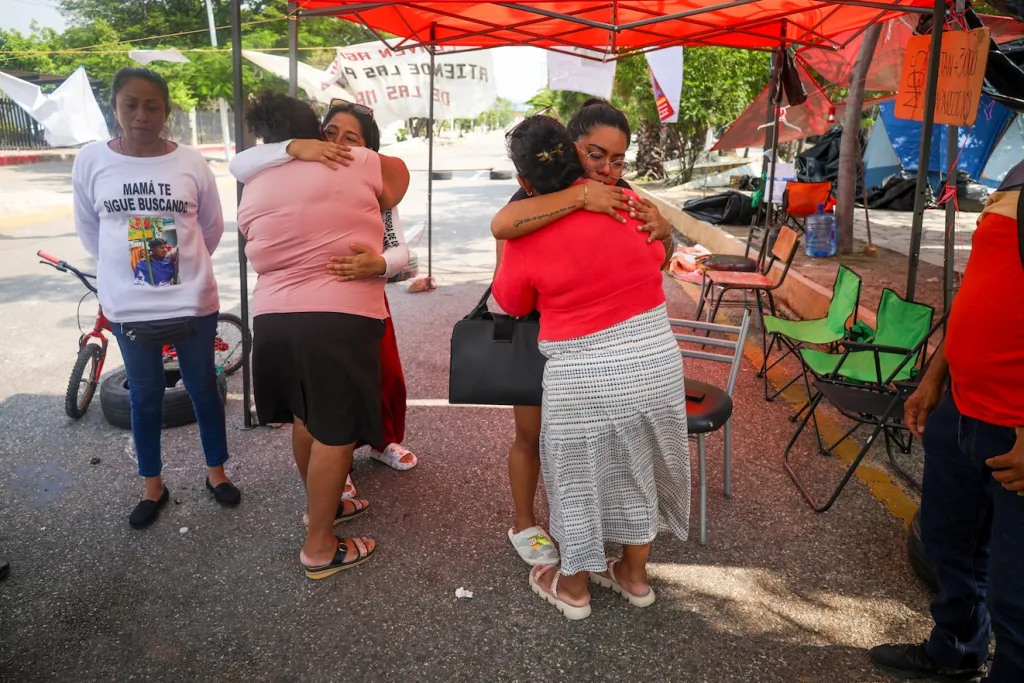 The public supported the searchers, who held a sit-in outside the Attorney General’s Office in October of this year. (Damián Sánchez)
Since then, and while the current government of Eduardo Ramirez continues to blame his predecessors for the disappearances that occur in the state, Isabel continues searching, but she is no longer alone.
With her fellow members of the Searching Mothers of Chiapas, she entered the women’s section of El Amate prison in the municipality of Cintalapa on November 25th, as part of the ongoing searches for missing persons in the state’s prisons. She was overcome with anguish when she didn’t see Cassandra, burst into tears, and the other inmates shouted to her: “Courage, brave women, you’re going to find her!”
“I’ve walked, I feel powerless, saddened by searching and finding nothing,” Isabel says. “But my search doesn’t end here. I will continue until I find my daughter Cassandra. I will search until my last breath.”
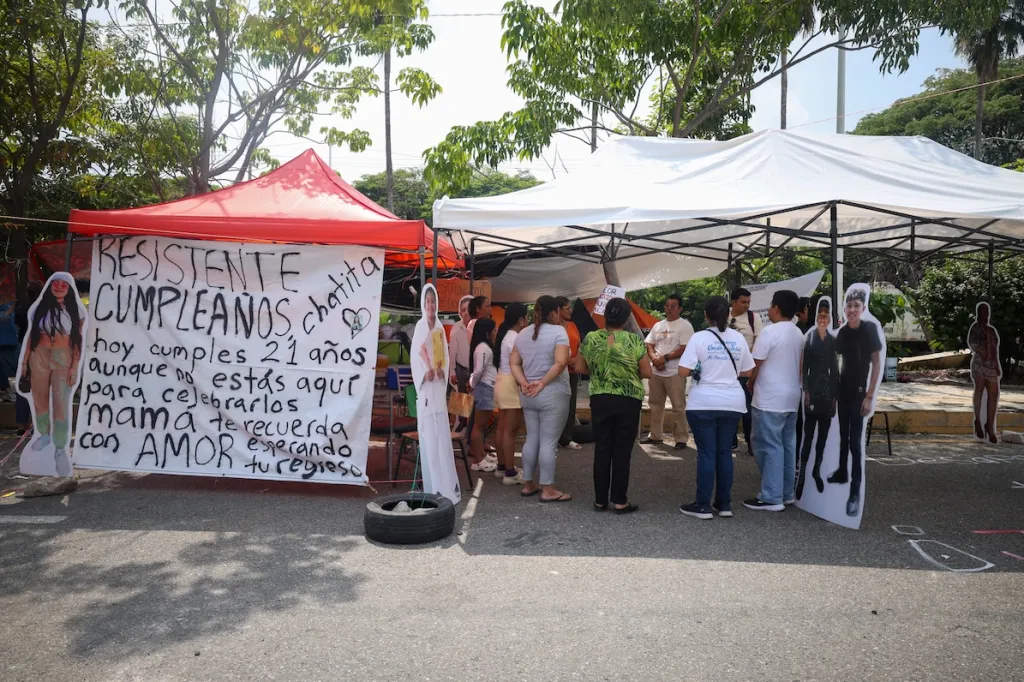 During the protest they held in front of the Attorney General’s Office, Cassandra celebrated her birthday, and Isabel carried a banner to commemorate her. (Damián Sánchez)
Laura Islas contributed to this report.
Top photo: Isabel Torres displays a photo of her daughter Cassandra, who disappeared in Berriozábal on December 17, 2022, at the age of 18. (Damián Sánchez)
This report was produced with the support of the International Women’s Media Foundation (IWMF) , as part of its “Express Yourself!” initiative in Latin America.
http://www.adondevanlosdesaparecidos.org is a research and memorial website about the dynamics of disappearances in Mexico. This material may be freely reproduced, provided that credit is given to the author and to A dónde van los desaparecidos (@DesaparecerEnMx).
Machine translation
The post The tireless search for Cassandra appeared first on Freedom News.